Beekeeping Gear
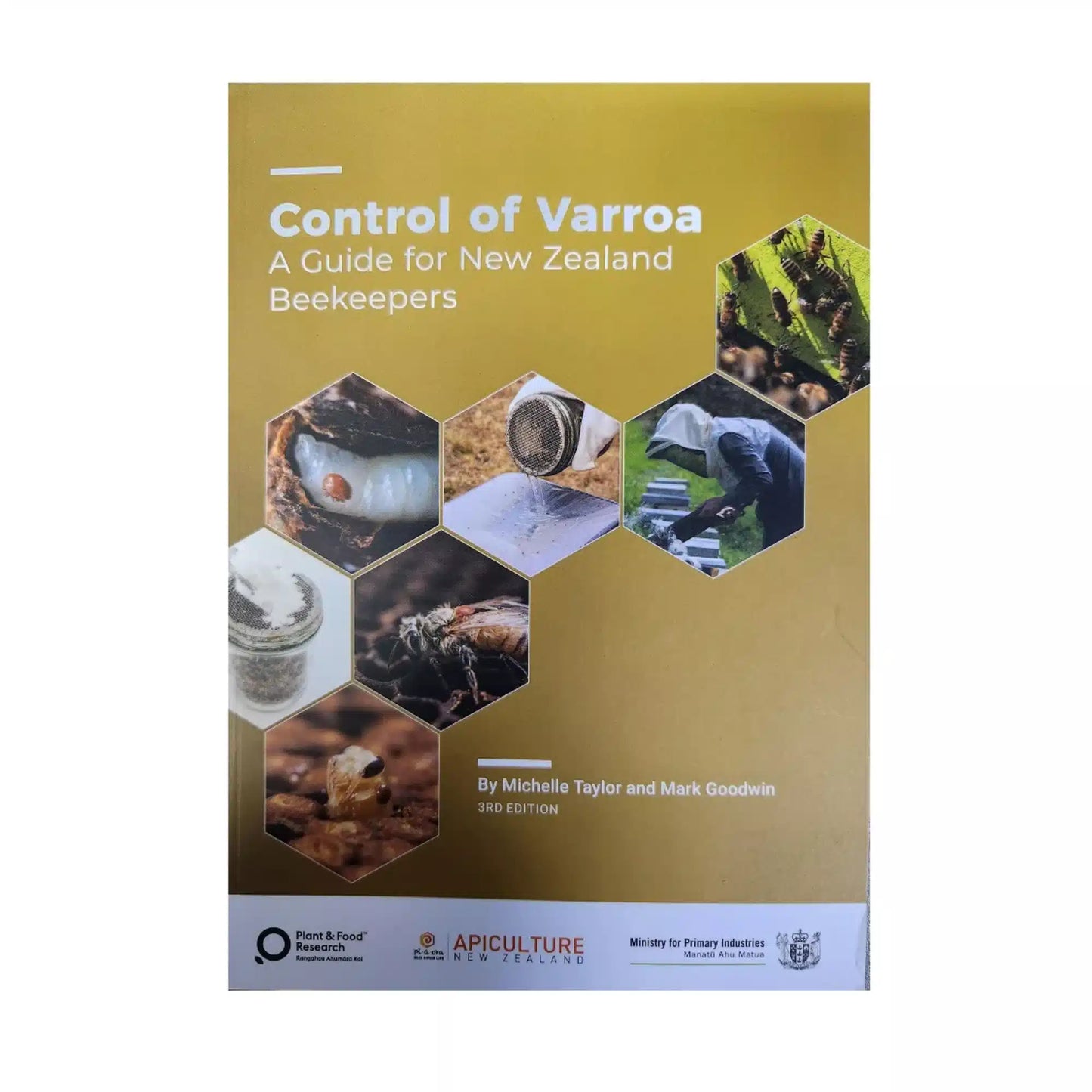
Control of Varroa Book - Taylor & Goodwin 3rd Edition
Control of Varroa Book - Taylor & Goodwin 3rd Edition
Couldn't load pickup availability
The Varroa Manual Written by People Who Have Lived With It for 20 Years
Varroa is no longer something Australian beekeepers read about happening to other people. Since the mite was found in New South Wales in 2022 and the country moved from eradication to management, every hive owner here has had to start learning a set of skills that beekeepers overseas built up over decades. Counting mites, choosing a treatment, timing it around the brood cycle, checking whether it actually worked. None of it is hard once you know how, but there is a lot of it, and forum advice tends to be patchy and contradictory.
Control of Varroa: A Guide for New Zealand Beekeepers is the book most people end up being pointed towards. This is the third edition, written by Dr Michelle Taylor and Dr Mark Goodwin of Plant & Food Research and published by New Zealand's Ministry for Primary Industries. It's a softcover manual of around 180 pages with colour photographs and diagrams. New Zealand has been managing varroa since 2000, so what you're buying is a practical account of what has worked, what has stopped working, and why.
Built on Experience, Not Theory
The first edition came out not long after varroa reached New Zealand, and each revision since has folded in what beekeepers and researchers learned along the way. This third edition draws on more than two decades of managing the mite across both islands, alongside research from Europe and North America. Treatments that worked reliably ten years ago have lost their edge in some places as mites developed resistance, and the book is upfront about that, one of its main messages is that you need to monitor after treating, not just assume the strip or the vaporiser did its job.
What the Book Covers
It starts with the biology, how the mite reproduces inside capped brood, how fast populations grow, and what damage looks like in a colony before it's obvious. From there it moves into monitoring methods, including sugar shake, alcohol wash, drone brood uncapping, and natural mite fall, with guidance on working out what your counts actually mean. The treatment chapters cover both synthetic chemicals and organic acids such as formic and oxalic, plus non-chemical approaches like drone brood removal and brood breaks. There's also a section on breeding for varroa tolerance and a chapter on integrated pest management.
Reading It as an Australian Beekeeper
This is a New Zealand book and it doesn't pretend otherwise. The treatment products it discusses are those registered in New Zealand, and the seasonal timing is written for their climate. Some of those products are registered here under the APVMA and some are not, so always check the current Australian list before you buy or apply anything. The biology, the monitoring methods, and the reasoning behind when to treat all carry straight across.
Who It Suits
Hobbyists with a few hives will get the most out of the monitoring and treatment chapters and can skim the breeding material. Commercial and sideline beekeepers will find the resistance, IPM, and timing sections the most useful, since the cost of a failed treatment scales with hive numbers. It also works well as a club or mentoring resource, explaining the reasoning clearly enough that a newer beekeeper can follow it without someone standing over them.
Specifications
- Title: Control of Varroa: A Guide for New Zealand Beekeepers
- Authors: Dr Michelle Taylor and Dr Mark Goodwin
- Edition: 3rd edition (revised and updated)
- Publisher: Ministry for Primary Industries, New Zealand
- Format: Softcover, approximately 180 pages
- Topics: Varroa biology, monitoring, chemical and non-chemical control, resistance, breeding for tolerance, IPM
Is this book relevant to Australian beekeepers?
Yes, though it's written for New Zealand conditions. The biology, monitoring methods, and treatment reasoning carry across, though specific product registrations differ.
Who wrote this book?
Dr Michelle Taylor and Dr Mark Goodwin of Plant & Food Research, published by New Zealand's Ministry for Primary Industries.
Which edition is this?
This is the third edition, revised and updated to include more than two decades of varroa management experience across New Zealand.
Does it cover chemical and non-chemical treatments?
Yes, it covers synthetic chemicals, organic acids like formic and oxalic acid, and non-chemical approaches such as drone brood removal and brood breaks.
Can I use the treatment products mentioned in this book in Australia?
Some are registered here under the APVMA and some aren't, so always check the current Australian list before buying or applying any treatment.
What monitoring methods does the book explain?
It covers sugar shake, alcohol wash, drone brood uncapping, and natural mite fall, along with how to interpret what your counts actually mean.
Is this book suitable for hobbyist beekeepers?
Yes, hobbyists will get the most value from the monitoring and treatment chapters, and can skim the more technical breeding material.
Is this book useful for commercial beekeepers?
Yes, commercial and sideline beekeepers will find the resistance, IPM, and timing sections particularly useful given the cost of a failed treatment at scale.
Does the book address treatment resistance?
Yes, it's upfront that some treatments have lost effectiveness over time as mites developed resistance, and stresses monitoring after every treatment.
How long is the book?
It's a softcover manual of around 180 pages, illustrated throughout with colour photographs and diagrams.