Beekeeping Gear
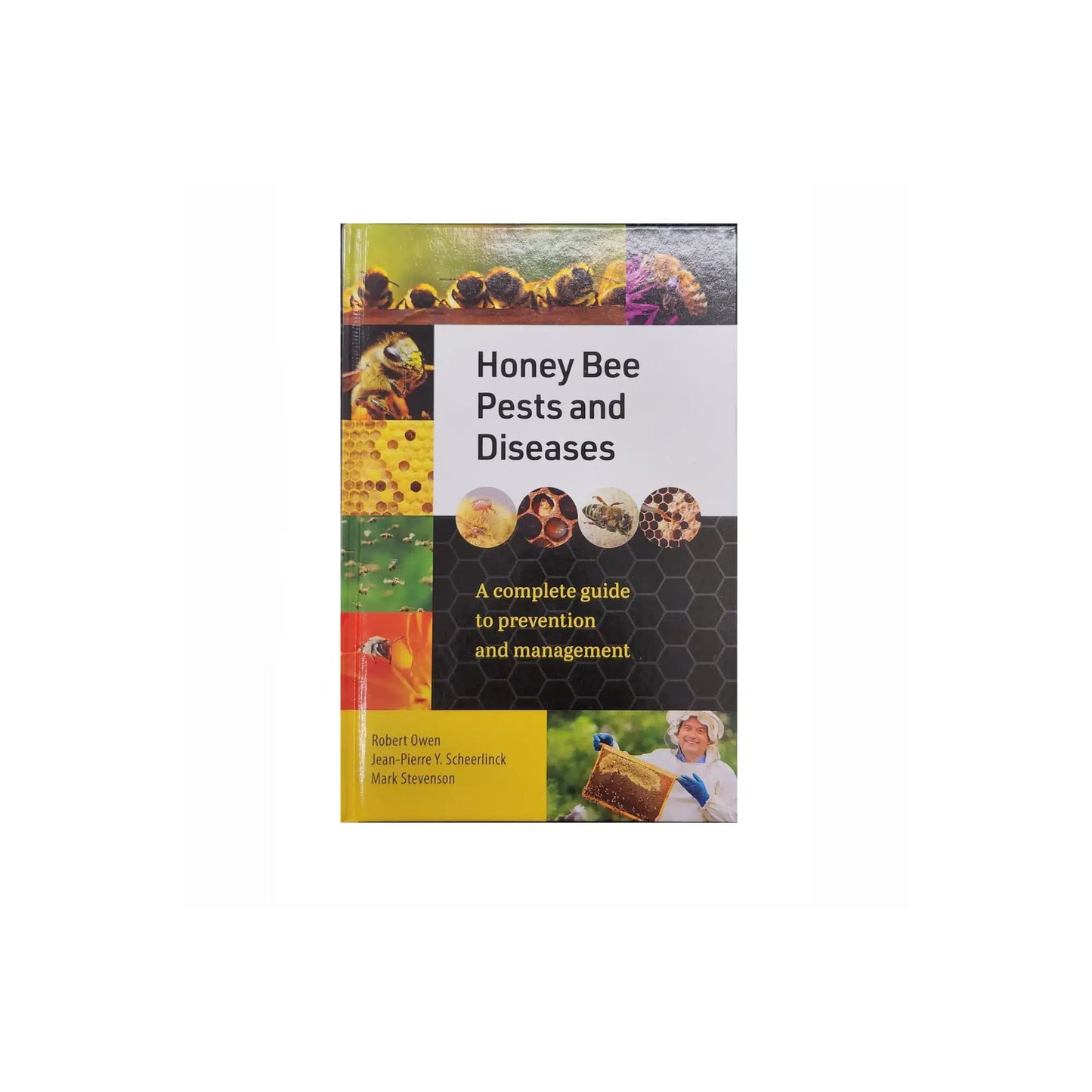
Honey Bee Pests & Diseases - Hardcover Guide
Honey Bee Pests & Diseases - Hardcover Guide
Couldn't load pickup availability
The reference every Australian beekeeper now needs on the shelf
For a long time, Australian beekeepers could read about varroa the way you read about a problem in another country. That changed when the mite turned up at the Port of Newcastle in 2022. Varroa is here now, and with it comes a long list of pests and diseases that most local beekeepers never had to identify by sight before. Knowing what you are looking at when you pull a frame, and knowing what to do about it, has quietly become one of the most important skills in the craft.
This hardcover is a complete guide to spotting, understanding, and managing the threats a colony faces. It is written by three scientists who are also long-time beekeepers, and it is built largely on Dr Robert Owen’s PhD research into varroa, completed in 2022. The result is a book that explains not just what a disease looks like, but how the pathogen actually affects the bees, which is the part most other books skip.
Written by people who keep bees, not just study them
The three authors, Robert Owen, Jean-Pierre Scheerlinck, and Mark Stevenson, are all connected to the University of Melbourne and all keep hives themselves. Owen wrote The Australian Beekeeping Manual and has advised beekeepers across several countries. Scheerlinck works in animal biotechnology and biosecurity and started the university bee club. Stevenson is a professor of veterinary epidemiology. That mix matters, because the book reads like science you can actually apply at the hive, not a textbook written at arm’s length from the bees.
Varroa gets the attention it deserves
Because the book grew out of varroa research, it treats the mite with the depth the subject now demands in Australia. You get the biology, the monitoring methods, and the management options laid out clearly enough to act on. For anyone still getting their head around mite counts, thresholds, and treatment timing, this is the sort of grounding that saves colonies.
It covers the whole picture, not just mites
Varroa is the headline, but a hive faces plenty else. The book works through integrated pest management, epidemiology, viruses, brood diseases, other mites, and parasites, along with the general troubles a colony runs into. Understanding how these problems connect, and how one weakness opens the door to another, is what turns reactive beekeeping into something closer to prevention.
Built to be used, not shelved
This is a hardcover, which suits a book you will pull down again and again during inspections rather than read once and forget. It is richly illustrated with photographs and diagrams, so identification is a matter of comparing what is in front of you to a clear image rather than guessing from a description. It is written to be understood by beginners while still holding real depth for experienced keepers and specialists.
Specifications
- Authors: Robert Owen, Jean-Pierre Y. Scheerlinck, Mark Stevenson
- Format: Hardcover
- Publisher: Exisle Publishing
- Illustrations: Photographs and diagrams throughout
- Topics covered: IPM, epidemiology, viruses, brood diseases, mites, parasites, prevention and management
- Audience: Beekeepers of all levels, from beginners to specialists
Is this book relevant to Australian beekeepers?
Yes, more than most. The authors are based in Melbourne and the book grew out of varroa research done in Australia and overseas. With the mite now established here, the content lines up directly with what local beekeepers are facing rather than being written for conditions on the other side of the world.
Do I need to be experienced to follow it?
No. It is written in plain, accessible language and is aimed at beekeepers of all levels. Beginners can use it to learn what healthy and unhealthy brood looks like, while experienced keepers and specialists will still find the depth they want.
Does it actually cover varroa treatment?
Yes. Varroa is a central focus, including how to monitor for it and the management options available. Since the book is built on recent varroa research, this is one of its strongest areas.
Is it only about varroa?
No. Varroa gets serious attention, but the book also covers viruses, brood diseases, other mites, parasites, and integrated pest management. It is meant to be a complete reference for colony health, not a single-topic guide.
Why choose the hardcover?
A hardcover holds up to repeated handling in the shed and on inspection days, which is exactly how a reference book like this gets used. It lies flat, survives the odd sticky thumb, and lasts through years of being pulled off the shelf.