Beekeeping Gear
Native Bee Hive & Bug Hotel | Wooden Garden House
Native Bee Hive & Bug Hotel | Wooden Garden House
Couldn't load pickup availability
Give Australia's Native Pollinators a Place to Call Home
Most people think of beekeeping as needing a suit, a smoker, and a full Langstroth hive setup. But Australia has over 1,700 species of native bees, and most live completely alone, no colony, no queen, no honey to harvest. Each female builds her own nest, lays her eggs, and pollinates everything around her.
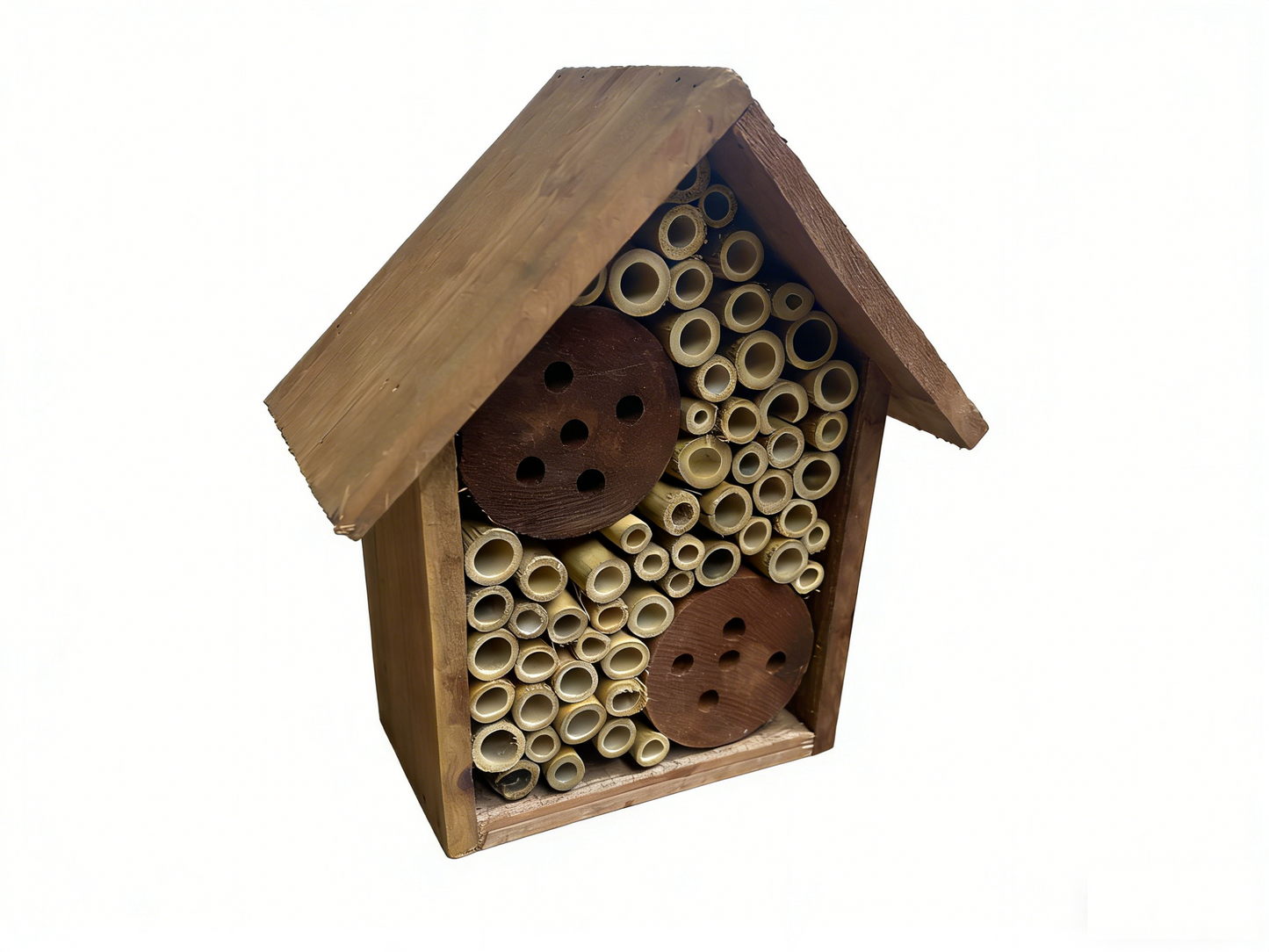
This wooden native bee hive and bug hotel gives her exactly that. Natural timber construction, hollow bamboo tubes, and drilled hardwood inserts in varying diameters offer two proven nesting formats for solitary native bees. Hang it in the garden, face it toward the morning sun, and let the pollinators find it.
Who Actually Moves In
Native solitary bees are the primary tenants, species like leafcutter bees, masked bees, and resin bees that use the tubes and holes to lay and seal their eggs for the season. They are gentle, non-aggressive, do not form swarms or defend a colony, and are often more effective pollinators per visit than European honey bees.
Beyond the bees, the hotel attracts ladybugs, lacewings, and predatory wasps, beneficial insects that eat aphids, mites, and caterpillars, meaning less need for sprays and a healthier garden ecosystem.
Bamboo Tubes and Drilled Hardwood, Why Both Matter
Different native bee species have different nesting preferences, some favour hollow tubes, others prefer solid wood with a drilled hole. Combining both formats appeals to the widest range of species. Bamboo tubes attract leafcutter bees, which seal nests with neat circles of leaf, while hardwood inserts suit mason bees and resin bees that prefer a solid substrate.
No Suits, No Smoker, No Colony Management
There is nothing to inspect, treat, or manage, and no protective gear required. Hang it up, position it correctly, and let the insects do the rest, a simple way for families, schools, and community gardens to engage with pollinators without the risk of a managed honey bee colony.
Where and How to Hang It
Position the bug hotel 1 to 1.5 metres above the ground, facing north or north-east so morning sun warms the entrance holes and activates the bees. Place it near flowering plants, keep it away from heavy rain and strong winds, and avoid pesticides nearby, as solitary native bees are sensitive to chemical exposure.
A Genuinely Good Gift
It suits a birthday, housewarming, school fundraiser, or a Mother's Day or Father's Day present for a gardener. It looks beautiful mounted on a fence or wall, serves a real purpose, and tells a story about caring for the environment. For anyone who already keeps bees, it also extends pollinator support beyond the managed hive.
Specifications:
- Material: Natural timber with hollow bamboo tubes and drilled hardwood inserts
- Design: Multi-chamber structure with varied hole sizes for different species
- Residents: Native solitary bees, ladybugs, lacewings, predatory wasps
- Mounting: Hang or mount on a fence, wall, or post
- Ideal height: 1 to 1.5 metres above the ground
- Orientation: Face north or north-east for morning sun
- Maintenance: None required, set up and observe
- Suitable for: Backyard gardens, balconies, schools, community gardens, urban spaces
What is a native bee hive or bug hotel used for?
It is a timber shelter designed to attract and house Australia's native solitary bees and other beneficial insects, helping with garden pollination and natural pest control without keeping a honey bee colony.
What insects live in a native bee hive?
Common residents include leafcutter bees, resin bees, masked bees, ladybugs, lacewings, and predatory wasps, all of which pollinate plants or help control garden pests naturally.
Are native solitary bees dangerous to children or pets?
No, most native solitary bee species are stingless or non-aggressive, making a native bee hive a safe addition to backyards, schools, and community gardens with children and pets around.
How is a native bee hive different from a honey bee hive?
Unlike European honey bee hives that house colonies, a native bee hive supports solitary insects that live and nest individually, requiring no suits, smokers, or ongoing colony management.
What materials make up a native bee hive?
It combines hollow bamboo tubes of varying diameters with drilled hardwood inserts, two proven nesting formats that suit different native bee species based on hole size.
Where should I place a native bee hive in my garden?
Mount it in a sheltered spot around 1 to 1.5 metres above the ground, facing north or north east so morning sun warms the entrance holes and activates the bees.
Does a native bee hive need regular maintenance?
No, it is designed to be low maintenance. Once mounted in a suitable spot near flowering plants, nature does most of the work with minimal ongoing care required.
Can pesticides be used near a native bee hive?
It is best to avoid pesticide use in the surrounding garden, as chemicals can harm the native bees and beneficial insects the hive is designed to support.
How many native bee species are there in Australia?
Australia is home to more than 1,700 native bee species, most of which are solitary, meaning each female builds and provisions her own nest rather than living in a colony.
Is a native bee hive suitable for schools or small gardens?
Yes, its compact size and beginner friendly design make it ideal for backyards, balconies, schools, and community gardens looking to support pollinators without managing a full colony.