OZ ARMOUR
OZ ARMOUR Painted Hive | Wax-Dipped Mesh Board
OZ ARMOUR Painted Hive | Wax-Dipped Mesh Board
Couldn't load pickup availability
A Complete Two-Level Hive, Built and Ready to Go
Not every beekeeper needs three boxes from day one. If you're starting out, managing a smaller apiary, or simply prefer to build up at your own pace, a two-level hive is a smart and practical beginning. It gives a new colony exactly the space it needs to establish strongly without overwhelming them, and when the time comes to expand, adding a super is straightforward.
The OZ ARMOUR Assembled and Painted Beehive comes fully built, painted, and ready to accept bees. Two full-depth boxes made from 22mm New Zealand pine, a ventilated lid, a galvanised queen excluder, and importantly a wax-dipped mesh bottom board with beetle trap that no painting, no recoating, and no seasonal maintenance will ever be needed on. At $219.99, available in 8 or 10-frame with an optional wax-embedded frame set, it's a proper hive at a genuinely accessible price.
22mm NZ Pine: Thicker Than the Standard
Most imported hives are built from 19mm timber. This one uses 22mm New Zealand pine throughout, three millimetres thicker, which makes a real difference to insulation, structural rigidity, and how well the hive holds up over years of Australian weather. Thick walls mean the colony works less to regulate internal temperature, the timber resists warping and cracking longer, and the hive stays solid well into its second decade with basic care.
The exterior is painted white, UV-resistant and water-resistant, which reflects summer heat and protects the timber from moisture all year round. The interior is left as natural unpainted pine, which is what bees prefer a clean, breathable, scent-neutral surface they settle into readily.
Wax-Dipped Mesh Bottom Board: A Genuine Upgrade
The bottom board on this hive is not a painted solid board. It is a mesh bottom board with beetle trap, and it has been upgraded to wax-dipped construction, a detail that matters more than it might first appear, and one that sets this hive apart from others in our range that come with standard solid bottom boards.
Painted timber bottom boards start fine but don't stay that way. Australian humidity, wet winters, and dry summers work on paint over time, it cracks, moisture gets in, and eventually you're repainting or replacing. Wax dipping treats the timber from the inside, flooding the wood fibres with natural beeswax at around 150°C so the protection comes from within rather than sitting on the surface. Once done it never needs repeating. No painting, no recoating, no maintenance. Just a board that lasts.
The mesh floor itself is equally important. Bees naturally push small hive beetles toward the floor of the hive, and the stainless mesh lets them fall through into the removable tray below where they can't climb back out. Fill the tray with diatomaceous earth a natural, chemical-free powder and you have passive, continuous beetle management that works every day without any effort from you. The mesh also improves airflow through the base of the hive, reducing the moisture that leads to mould and unhealthy brood conditions, particularly through warmer and more humid periods.
For Australian beekeepers managing varroa, the mesh bottom board serves a second critical purpose. Varroa mites that drop off bees during natural grooming or treatment fall straight through the mesh and into the tray below where they cannot climb back up into the colony. This is known as a sticky board or varroa monitoring method, and it's one of the simplest and most reliable ways to monitor your mite load without disturbing the hive. Slide the tray in with a light coating of petroleum jelly or vegetable oil, leave it for 24 to 48 hours, and count the natural mite drop to get a clear picture of what's happening inside your colony. With varroa now established across much of Australia, having a mesh bottom board isn't just a nice-to-have, it's a practical tool that makes ongoing mite monitoring part of your regular hive management without any extra equipment needed.
Two Boxes: The Right Start for a New Colony
A new colony doesn't need three boxes immediately, in fact, too much space too soon can actually work against them. Bees need to be able to defend their hive, maintain temperature, and fill comb progressively. Two full-depth boxes gives a strong package or nucleus colony room to build out properly through their first season without being spread thin. When the colony is established and building well, adding a honey super on top is a straightforward next step.
For experienced beekeepers adding a second hive, splitting an existing colony, or setting up a mating nuc operation, the two-level setup is also a practical and cost-effective option that can be expanded whenever the colony demands it.
Galvanised Queen Excluder: Clean Honey Supers
The galvanised queen excluder sits between the brood box and the honey super, letting workers pass freely while keeping the queen where the brood should be. When you go to harvest, your honey frames are honey frames, no brood mixed in, no complications. For anyone new to beekeeping, this makes inspections and harvest considerably more straightforward from the very first season.
Ventilated Lid: Keeps the Colony Comfortable
On a hot Australian day, a sealed lid traps heat and forces the colony to spend energy fanning just to stay cool. The ventilated lid allows hot air to escape naturally from the top of the hive, taking that load off the bees and letting them focus on foraging and honey production instead. It's a simple design element that pays off in colony health and productivity through every summer.
8-Frame or 10-Frame: Which Suits You
The 10-frame is the Australian standard, maximum honey capacity per box and compatible with virtually all Langstroth accessories you'll ever need. The 8-frame is the lighter option, with each full box weighing around 4 to 6 kilograms less, which suits beekeepers who prefer easier lifting or are working in tighter spaces. Both come with the same components and the same quality of construction, it's simply a choice of what works better for how you keep bees.
With or Without Frames
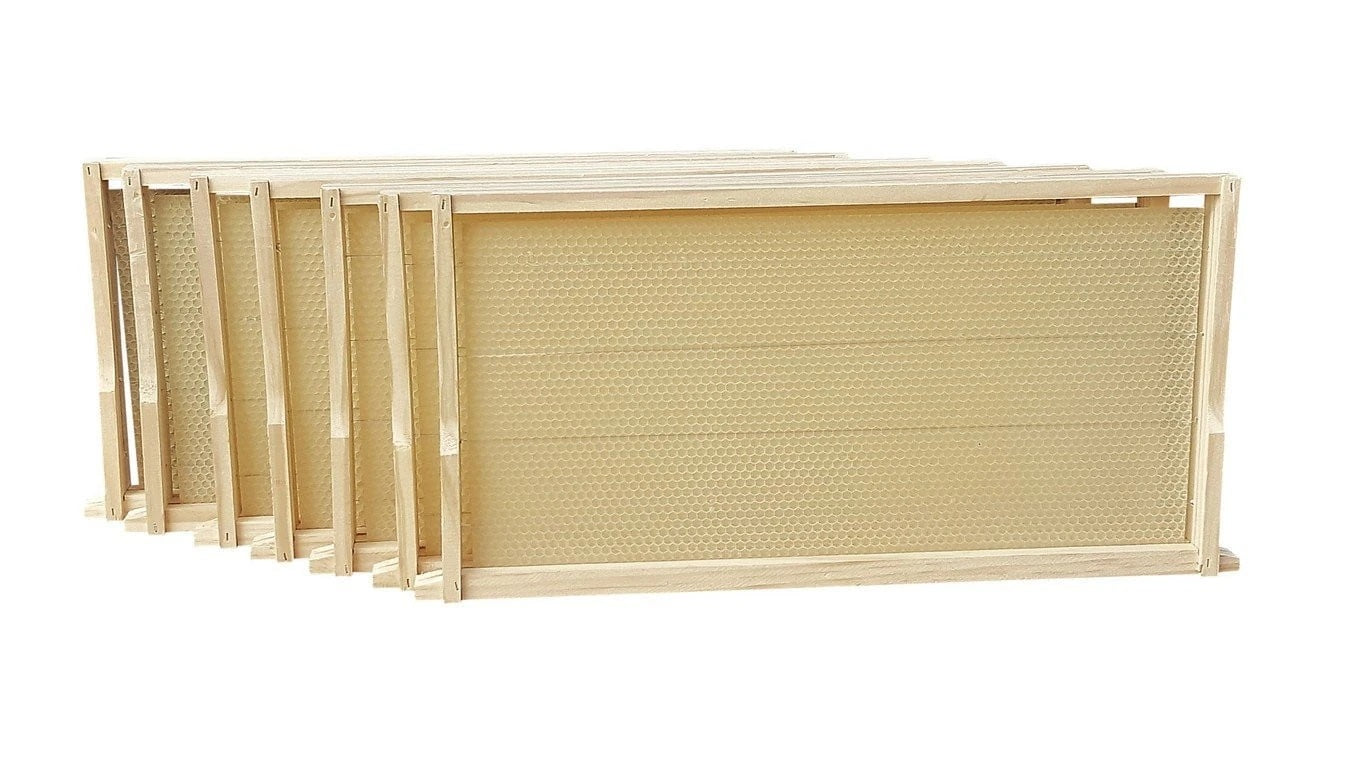
At checkout you can choose the hive without frames if you already have stock on hand, or add a full set of Australian-made wax-embedded frames ready for the bees to start drawing comb from day one. Wiring and embedding frames yourself takes several hours and requires specific tools for most new beekeepers and anyone who values their time, the frames-included option is the straightforward choice.
How This Compares to the Three-Level Hive
If you're deciding between this two-level hive and the three-level version, the main consideration is how quickly you expect your colony to grow and how much honey production you're aiming for in the first season. The three-level gives more room from the start and suits beekeepers who want maximum production capacity straight away. This two-level is the smarter starting point for new colonies, smaller apiaries, and beekeepers who prefer to expand gradually as the colony builds. Both come with the same upgraded wax-dipped mesh bottom board that's consistent across the range.
Specifications
- Brand: OZ ARMOUR trusted globally since 2018
- Configuration: 2 x full-depth boxes, fully assembled and painted white
- Timber: 22mm New Zealand pine, knot-free, dimensionally stable
- Exterior: UV-resistant, water-resistant white paint
- Interior: Unpainted natural NZ pine, bee-friendly
- Bottom board: Wax-dipped mesh with beetle trap, no painting required, maintenance-free
- Bottom board note: Mesh bottom board not included on all hive models in our range
- Beetle control: Removable tray, use with diatomaceous earth
- Lid: Ventilated telescopic lid
- Queen excluder: Galvanised included
- Frame options: No frames OR wax-embedded frames (choose at checkout)
- Frame count: 20 x full-depth 10-frame OR 16 x full-depth 8-frame
- Sizes: 8-frame or 10-frame Langstroth
- Lifespan: 15-20+ years with basic care
- Rating: 4.9/5 stars