Beekeeping Gear
Ventilated Pollen Trap | Removable, Bee-Safe
Ventilated Pollen Trap | Removable, Bee-Safe
Couldn't load pickup availability
Double Your Hive’s Income - Sell Honey AND Pollen
Most beekeepers think honey is the only product worth harvesting from their hive but they’re leaving serious money on the table. Bee pollen is one of the world’s most prized natural superfoods, selling at premium prices year-round, and it comes from the same hive that produces your honey. With a quality pollen trap, you don’t do any extra work the bees do the collecting, you collect the pollen, and you dramatically increase the revenue from every single hive you own.
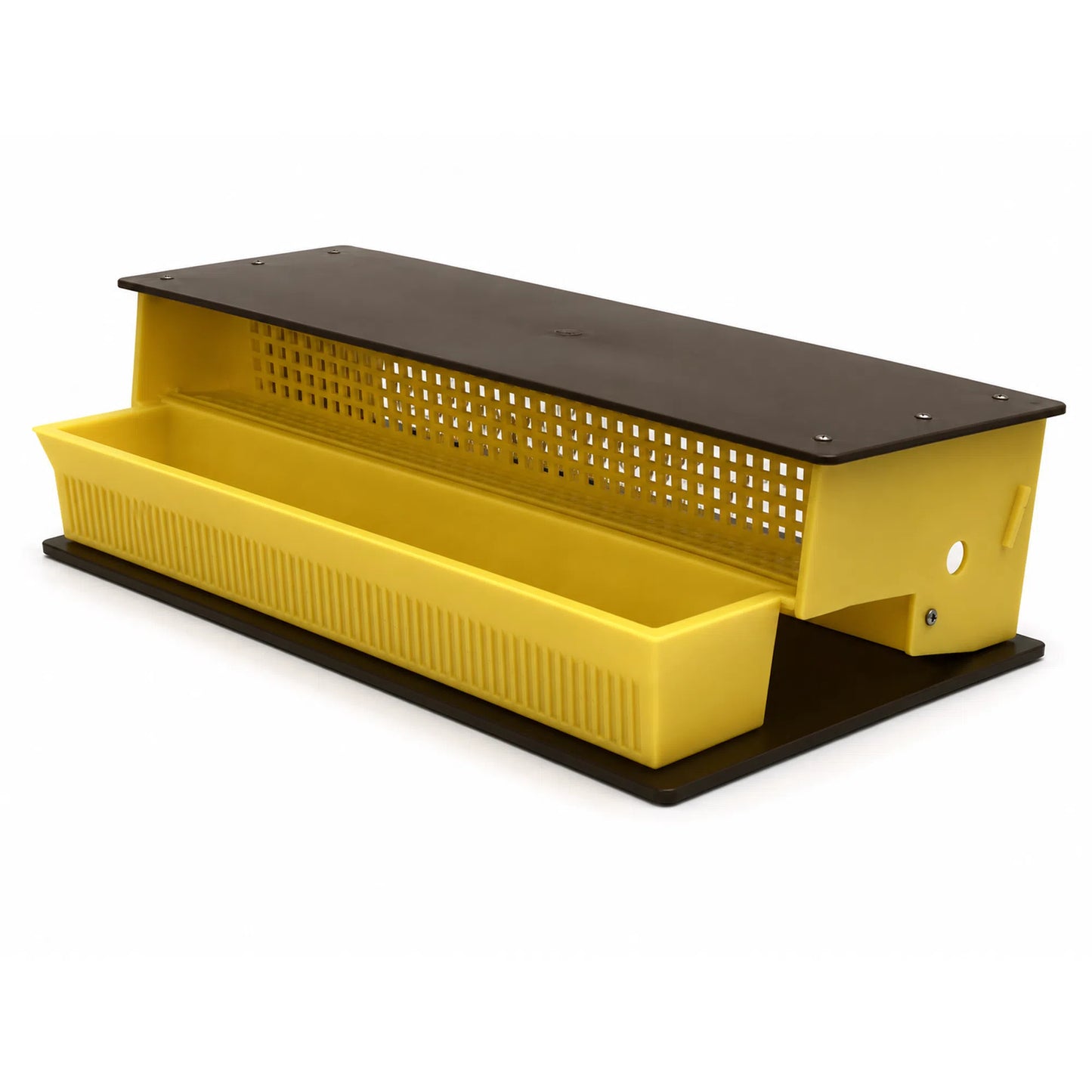
The Ventilated Pollen Trap is engineered for efficiency, durability, and bee safety. It collects up to 1 kg of fresh pollen per harvest, uses a bee-safe plastic grate that gently strips pollen from foragers’ legs as they enter the hive, features a ventilated slide-out tray that keeps pollen fresh and easy to remove, and includes an adjustable entrance controlled by a simple bulldog clip so you can collect or pause as needed. Weatherproof, durable, and built to last years.
Why Should I Harvest Bee Pollen?
Three excellent reasons. First, bee pollen sells at premium prices at health food stores and farmers markets, fresh local bee pollen typically fetches $50–100 per kilogram retail, with some boutique markets paying considerably more. Second, it requires no extra work, the bees collect it as part of their normal foraging; you collect the trap. And third, it lets you diversify your income. Instead of relying solely on honey production, you have a second product from the same hive that broadens your customer base and protects you from honey-market fluctuations.
Why Is Bee Pollen So Valuable?
Bee pollen is one of nature’s most complete superfoods, containing vitamins, minerals, amino acids, antioxidants, and significant protein (around 25–40% by weight). It’s used by athletes, health enthusiasts, gourmet foodies, and natural-medicine consumers as a daily supplement. Customers sprinkle it on breakfast bowls, smoothies, and yogurt; add it to health shakes and supplement blends; and use it in baking and granola production. The market demand is genuine, growing, and willing to pay premium prices for fresh, local, traceable pollen, exactly what a backyard or boutique beekeeper can supply.
How Does the Pollen Trap Work?
The design is straightforward and bee-friendly:
- Step 1 — Install: the trap sits between the hive entrance and the colony, replacing your standard entrance for the collection period
- Step 2 — Forage: worker bees fly out as normal to collect nectar and pollen
- Step 3 — Strip: returning foragers must pass through the bee-safe plastic grate, which gently strips pollen from their leg sacs
- Step 4 — Collect: stripped pollen falls into the ventilated slide-out tray below
- Step 5 — Harvest: remove the tray when full (~1kg), separate any debris, and your fresh pollen is ready to sell, freeze, or use
The whole process is entirely passive on your part, the bees do everything; you collect.
Will It Harm or Disturb My Bees?
No, the bee-safe plastic grate is specifically engineered so that bees pass through unharmed, with the gentle stripping action collecting about 60% of the pollen they’re carrying while leaving enough for the colony’s own brood-rearing needs. This is a key design principle: a well-built pollen trap supplements rather than starves your colony. To be extra cautious, you can use the adjustable entrance (controlled by the bulldog clip) to collect pollen for short periods only, for example, 2–3 days a week during peak pollen flow, letting the colony stock up between collection windows.
Can I Control When the Trap Is Active?
Yes, this is one of the smartest features. The adjustable entrance with a bulldog clip lets you switch between collection and non-collection modes without removing the trap. When you want to collect, leave the entrance restricted so that foragers pass through the grate. When you want to give your colony a break, clip the bypass open so bees enter the hive normally without going through the grate. This lets you:
- Collect during peak pollen flows: spring and early autumn typically produce the heaviest pollen harvests
- Pause during dearth periods: when natural pollen is scarce, give it all to the colony
- Manage colony stress: rotate on/off to keep both pollen production AND colony strength high
- Build a sustainable harvest schedule: maximise long-term yield without overharvesting
Will Pollen Spoil Before I Collect It?
This is where the ventilated tray makes a critical difference. Pollen is highly moisture-sensitivek, left in a sealed container, it ferments and goes mouldy quickly. Cheaper, non-ventilated traps degrade pollen quality quickly, especially in humid weather. Our ventilated tray allows continuous airflow around the collected pollen, keeping it dry and fresh until you collect it. Combined with collecting the tray every 2–3 days (or daily in peak flows), you get premium-quality fresh pollen suitable for retail sale at top market prices.
How Should I Process and Sell the Pollen?
After collecting from the trap:
- Clean: gently sift to remove debris like wing fragments or small bits of comb
- Freeze or dry: fresh pollen can be frozen for storage, or dried at low temperature (35–40°C) for a shelf-stable product
- Package: small glass jars (100–250g) are the most popular retail size
- Sell: farmers’ markets, health food stores, gourmet shops, online stores, and direct-to-consumer
How Quickly Will It Pay for Itself?
Across a full season with periodic collection, a single trap can produce 5–10 kg of premium pollen, worth $250–1,000+ in retail revenue per hive. For sideliners with multiple hives, pollen production becomes a significant income stream, turning the same number of hives into significantly more revenue.
Who Is This Pollen Trap For?
This trap is loved by any beekeeper wanting to diversify their hive income. It’s especially valuable for hobbyists wanting to add a second product to their honey range, farmers market sellers expanding beyond honey-only stalls, sideliners scaling their operation by adding pollen as a high-margin product, health food producers wanting traceable local pollen, commercial beekeepers already selling honey who want to capture pollen revenue on the same hives, and anyone curious about bee pollen who wants to try it for personal use or family supplements.
Specifications
- Type: Removable, ventilated pollen trap
- Position: Hive entrance (between the bottom board and the colony)
- Harvest capacity: Approximately 1 kg per collection
- Grate: Bee-safe plastic, gently strips pollen without harming bees
- Tray: Ventilated slide-out design for easy removal and fresh pollen
- Entrance: Adjustable via bulldog clip, control collection on/off
- Construction: Durable plastic, weatherproof for outdoor use
- Durability: Built to last years of regular use
- Pollen efficiency: Captures approximately 60% of incoming pollen, leaves enough for the colony
- Best harvest seasons: Spring and early autumn (peak pollen flows in Australia)
Why Buy From Beekeeping Gear?
Beekeeping Gear has been Australia’s trusted source for hive equipment, harvesting tools, and beekeeping essentials since 2016. We supply real Australian beekeepers from our showrooms in Granville (next to Clyde train station) and Meadowbrook (QLD), plus fast Australia-wide shipping on every order. We stock A-grade pollen traps only, avoiding the cheap factory rejects with bent trays that you’ll find elsewhere. Our team is practising apiarists, drop in or call us on 1300 692 766 for advice on pollen collection techniques, processing, and retail pricing.
Order your Ventilated Pollen Trap today and start harvesting nature’s golden superfood from the same hives that produce your honey. Double your income, same number of hives, no extra work.