Beekeeping Gear
3-Level Gabled Hive | Wax-Dipped Mesh Bottom Board
3-Level Gabled Hive | Wax-Dipped Mesh Bottom Board
Couldn't load pickup availability
Three Boxes, One Hive, Endless Flexibility
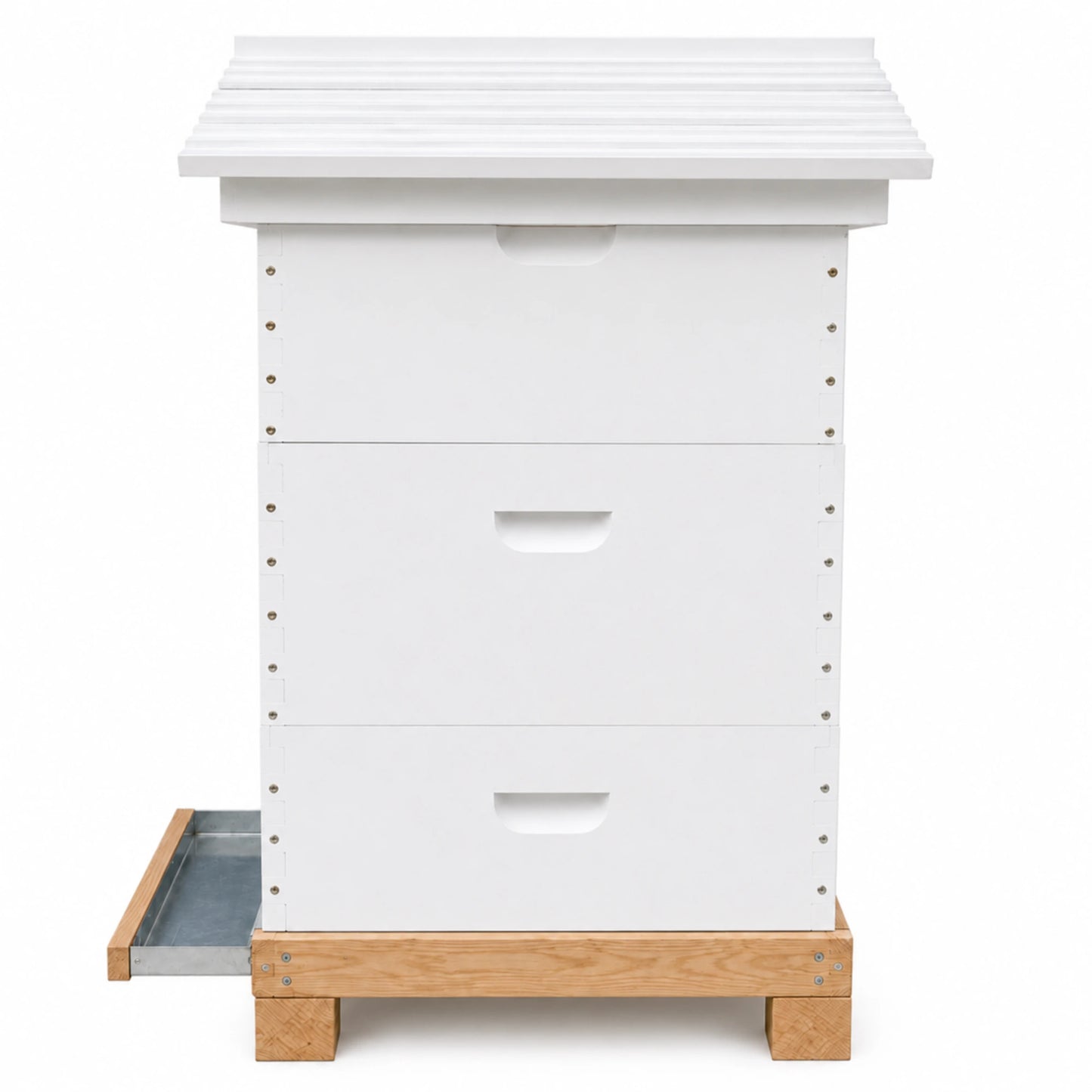
A hive's needs change with the seasons. Spring calls for brood space, summer calls for honey storage. This three-level gabled telescopic beehive is built for exactly that flexibility, three full-depth boxes, a ventilated gabled roof, inner cover, galvanised queen excluder, and a wax-dipped mesh bottom board with beetle trap, all assembled and painted, ready to go. Available in 8 or 10-frame, with optional wax-embedded frames.
Three Boxes: Configure the Hive to the Season
Run two brood boxes and one honey super in spring and early summer, when the queen is laying at full capacity and a crowded brood nest risks swarming. Switch to one brood box and two honey supers at peak production, maximising storage without adding boxes mid-season. This flexibility is why experienced beekeepers move to a three-box setup once they outgrow their first hive.
Gabled Roof: Built for Australian Weather
The pitched, ventilated roof sheds rain cleanly off both sides, preventing pooling and timber damage over time. It also lets hot air escape through the peak instead of radiating down into the colony, a real advantage during hot Australian summers when the hive is at its most populated.
22mm NZ Pine: Thicker Than Standard
Boxes are made from 22mm New Zealand pine, 3mm thicker than the 19mm standard used in most imported hives. This means better insulation, less warping, and a hive that holds structural integrity well into its second decade. The exterior is UV and water-resistant white paint, the interior is left as natural pine, the surface bees settle into most readily.
Wax-Dipped Mesh Bottom Board: Beetle and Varroa Control
Bees herd beetles toward the hive floor, where the mesh lets them fall into a removable tray, fill it with diatomaceous earth for continuous, chemical-free beetle control. The same tray supports simple varroa monitoring: coat it lightly with petroleum jelly or vegetable oil, leave it 24 to 48 hours, and count the natural mite drop, no frame inspection required. The wax-dipping seals the timber permanently, so the board needs no painting or maintenance.
Inner Cover and Queen Excluder Included
The inner cover sits below the roof, improving insulation and making roof removal cleaner at inspection time. The galvanised queen excluder keeps the queen confined to the brood boxes, so honey supers stay free of brood and eggs at harvest.
8-Frame or 10-Frame
The 10-frame version includes 20 full-depth frames, the Australian standard, offering maximum capacity and compatibility with Langstroth accessories. The 8-frame includes 16 frames and is lighter when full, suited to easier handling or tighter spaces.
Wax-Embedded Frames: Optional at Checkout
Choose the hive without frames if you already have stock, or add a full set of wax-embedded frames (20 for 10-frame, 16 for 8-frame) so you can install your colony immediately, skipping the multi-hour job of wiring and embedding frames yourself.
Specifications
- Brand: OZ ARMOUR, trusted globally since 2018
- Configuration: 3 x full-depth boxes, fully assembled and painted white
- Timber: 22mm New Zealand pine, knot-free, dimensionally stable
- Exterior: UV-resistant, water-resistant white paint
- Interior: Unpainted natural NZ pine, bee-friendly
- Roof: Gabled telescopic with ventilation, superior rain shedding and airflow
- Inner cover: Included
- Queen excluder: Galvanised, included
- Bottom board: Wax-dipped mesh with beetle trap, maintenance-free
- Beetle control: Removable tray, use with diatomaceous earth
- Varroa monitoring: Removable tray for natural mite drop counts
- Spring/summer configuration: 2 brood boxes + 1 honey super
- Peak production configuration: 1 brood box + 2 honey supers
- Frame options: Without frames OR with wax-embedded frames (choose at checkout)
- Frame count: 20 frames (10-frame) OR 16 frames (8-frame)
- Sizes: 8-frame or 10-frame Langstroth
- Lifespan: 15-20+ years with basic care
- Rating: 4.9/5 stars
Does this beehive arrive fully assembled and painted?
Yes. The hive arrives fully assembled and painted, ready for immediate use in your apiary without needing tools, hardware, or paint before setup.
What material is the beehive made from?
It is made from 22mm thick New Zealand pine, a dense, premium wood chosen for durability and long term protection against heat, rain, and general weather exposure.
How many boxes does this beehive include?
The hive includes three full depth boxes, giving ample space for brood rearing and honey storage across the colony's growth stages.
What frame options are available?
Buyers can choose between 8 or 10 frame sizing, with a choice of 20 or 16 wax embedded frames included, giving bees a head start on comb building and faster colony expansion.
How does the roof design help the hive?
The telescopic gabled roof improves air circulation, helping regulate internal hive temperature while also shielding the colony from rain and direct sunlight.
Does this hive include pest protection features?
Yes. A mesh bottom board with a beetle trap tray targets hive beetles specifically, combining pest control with improved ventilation to support a healthy colony.
What is the queen excluder used for?
The included queen excluder keeps the queen confined to the brood chamber, preventing her from laying eggs in the honey supers and keeping honey production areas separate.
What does the inner cover do?
The inner cover adds an extra layer of insulation during colder months and prevents bees from building comb between the frames and the outer cover, making inspections easier.
Is this beehive suitable for beginner beekeepers?
Yes. Since it arrives fully assembled and painted with frames included, it removes the setup barrier that often challenges beginners, while still offering the features experienced beekeepers expect.
Why choose a pre-assembled hive instead of a flat pack kit?
A pre-assembled hive saves significant setup time and removes the need for tools or painting supplies, letting beekeepers place the hive in their apiary and introduce a colony immediately.