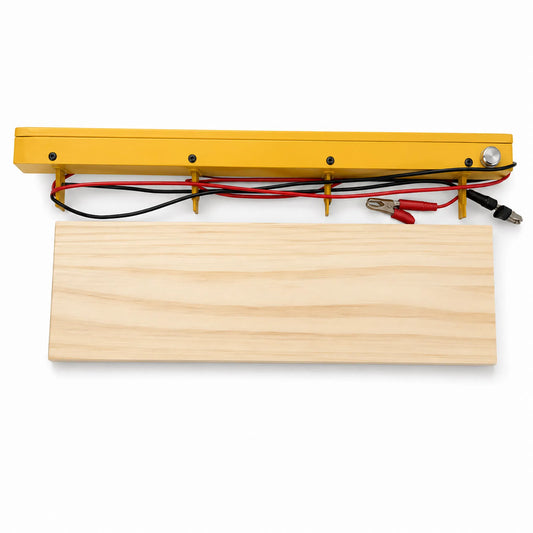
Frame wiring tools are essential for every beekeeper, providing the stability and strength required for hive frames. Our comprehensive range of frame wiring tools ensures that your beekeeping experience is efficient, enjoyable, and productive. Perfect for hobbyists and professional beekeepers alike, our tools guarantee precision and durability.
Our frame wiring tools are meticulously designed to enhance your beekeeping efficiency. The ergonomic handles and rust-resistant finish ensure durability, while the high-quality materials promise longevity. Whether you are a novice or a seasoned beekeeper, our tools offer the precision and ease you need for successful frame wiring.
Ready to elevate your beekeeping experience? Browse our selection of frame wiring tools today and find the perfect addition to your beekeeping toolkit. Order now and enjoy seamless frame wiring that stands the test of time!
Why do beekeeping frames need to be wired?
Frame wiring is essential for keeping foundation wax sheets straight and preventing them from sagging, bulging, or collapsing — especially when frames are heavy with honey or during the high-speed spinning of a honey extractor. Wired frames produce a stronger, more durable comb that lasts for years and can withstand transport, inspection, and extraction without breaking. Without wire, your frames would warp under the weight of brood and honey, and your comb wouldn't survive being spun in an extractor.
What tools do I need to wire beehive frames?
To wire frames properly, you'll need a few key tools: frame wire (stainless steel for longevity), eyelets to protect the wire from cutting into the wooden frame, a frame wiring bench or jig to hold the frame steady while you work, a wire crimper or tensioner to pull the wire tight, and a wire embedder (manual or electric) to press the wire into the wax foundation. For beginners, our Frame Wiring Kit includes most of these tools in one bundle — a great starting point.
What's the difference between a manual and an electric wire embedder?
Both tools embed the wire into the wax foundation, but the way they work is different. A manual wire embedder is a small handheld tool you push along the wire to physically press it into the foundation — affordable, simple, and reliable. An electric wire embedder uses a low electrical current to gently heat the wire, which melts into the foundation in seconds — faster, easier, and ideal for beekeepers wiring lots of frames. Hobby beekeepers wiring just a few frames per year will be fine with the manual. Commercial beekeepers and queen breeders typically prefer electric for speed and consistency.
How does an electric wire embedder work?
An electric wire embedder passes a low-voltage current through the frame wire, heating it just enough to soften the surrounding wax. As the wire warms, it sinks neatly into the foundation, creating a strong bond in seconds. Our electric wire embedder is wooden-board-based for stability and is available with an optional battery charger so you can use it portably in your apiary or workshop.
What size and gauge of wire should I use for beehive frames?
In Australia, the standard is 0.5mm to 0.6mm tinned or stainless steel wire. We stock two grades: Premium SS304 frame wire made in Finland — top-tier quality, lasts for decades — and Standard quality SS304 frame wire made in Germany — excellent value with reliable performance. Both are stainless steel for rust resistance, food-safe contact with comb and honey, and long-term durability. Avoid using galvanised or copper wire — it can rust, contaminate honey, and weaken over time.
What are eyelets, and do I need them?
Eyelets are small brass rings that you hammer into the side bars of your frame before threading the wire through. They prevent the wire from cutting into the soft pine wood under tension and allow you to re-tension the wire over time as it loosens, without damaging the frame. Eyelets are highly recommended — skipping them shortens the life of your frames significantly. We stock them in packs of 1,000 (great for hobbyists) and 1kg bulk bags (perfect for commercial operations).
How tight should the wire be on a beehive frame?
Frame wire should be tight enough to make a clear musical "ping" when plucked — but not so tight that it bows the side bars of the frame. A properly tensioned wire is firm and straight, with no sag. Use a wire crimper or tensioner to pull the wire taut after threading. Crimpers create small kinks in the wire, which act like springs to keep tension as the wood naturally expands and contracts with humidity. Re-check tension every season and re-tighten as needed.
What is a frame wiring bench (or jig), and do I need one?
A frame wiring bench is a steel jig that holds your frame square and steady while you thread, tension, and embed the wire. Without one, frames can twist or skew during wiring, leading to a crooked comb. With one, frames stay perfectly square, wiring is faster and more consistent, tension is even across all wires, and both hands stay free for crimping and embedding. If you wire more than a handful of frames a year, a wiring bench is a worthwhile investment.
How many wires should each beehive frame have?
The standard is: Full Depth frames — 4 horizontal wires; WSP frames — 3 horizontal wires; Ideal frames — 2 to 3 horizontal wires (depending on your style). Some beekeepers prefer vertical wiring or a mix of both — both are valid. The most important thing is consistent tension and proper embedding into the wax foundation.
Do I have to wire frames if I'm using a plastic foundation?
If you're using a plastic foundation (such as a plastic Permadent or Pierco-style foundation), wiring is not required because the plastic provides its own structural support. You can wire over plastic for extra strength if you want, but most beekeepers using plastic foundation skip wiring altogether. If you're using traditional wax foundation, wiring is essential to prevent sagging and to make your comb extractor-safe. Many Australian beekeepers stick with wax foundation because bees draw and store comb on it more naturally.

 Sale
Sale