Feed Smarter. Keep Your Bees Stronger.
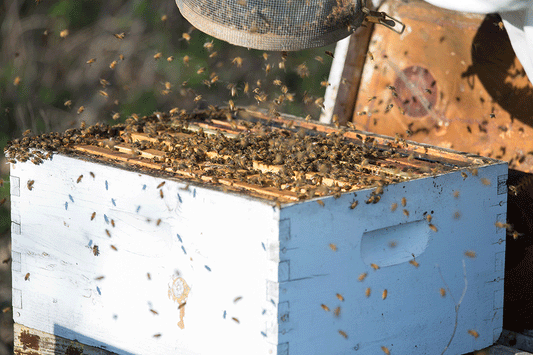
Bees are incredible foragers — but there are times when even the best colony needs a helping hand. Whether you're getting a new package established, carrying your bees through a dry summer dearth, or building up stores before winter, the right feeder makes the job cleaner, safer, and far more effective.
Some beekeepers feel uncertain about supplemental feeding — as if stepping in somehow means they've failed their bees. It doesn't. Feeding is not a sign of a bad beekeeper. It's a sign of an attentive one. Nature doesn't always cooperate. Droughts happen. Dearths happen. New colonies need time to establish. Feeding your bees through those periods is exactly what responsible beekeeping looks like.
There's also a very practical reason to keep your colonies well fed and strong: a strong colony is a healthy colony. Bees that have good nutrition, solid stores, and a thriving population are far better equipped to fight off disease, resist pests like Varroa and small hive beetle, and recover quickly from setbacks. Colonies that are weak, stressed, or hungry are the ones that become vulnerable. Keeping your bees well nourished is one of the simplest and most effective things you can do to reduce disease pressure across your whole apiary.
In Australia, feeding bees isn't just good hive management — it's also a biosecurity responsibility. Feeding outside the hive is illegal. Open feeding attracts bees from other colonies, and that mixing of bees from different hives is exactly how disease spreads. Any feeder that delivers syrup outside or at the entrance to the hive creates that risk. It's not worth it.
That's one of the reasons we strongly recommend hive top feeders over entrance feeders for most beekeepers. Everything stays inside the hive, the syrup is only accessible to your colony, and you're not creating an open invitation for every bee in the neighbourhood to come and investigate.
Why a Top Feeder is the Smarter Choice
A well-designed hive top feeder sits above the brood box, beneath the outer lid, and lets your bees access syrup from below through a screened or slotted opening. The feed is fully enclosed within the hive structure — no exposed syrup, no scent trail drifting across the apiary, no robbing trigger.
But the benefits go beyond biosecurity. Here's what makes top feeders the preferred choice for experienced beekeepers:
-
No full hive opening required — you simply lift the outer lid to refill, which means less disruption to the colony, no loss of the hive's internal temperature, and significantly less risk of bee stings during the feeding process
- Large capacity — our top feeders hold several litres of syrup, so you're not out there refilling every day
-
The colony stays calm — because you're not pulling frames or breaking the propolis seal on the brood box, the bees barely notice you're there
-
Works in all seasons — in cooler months especially, keeping the hive closed during feeding protects the brood nest from temperature drops that can harm developing larvae
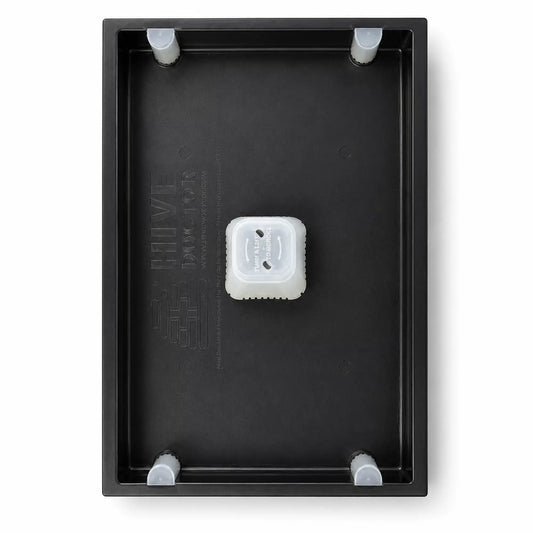
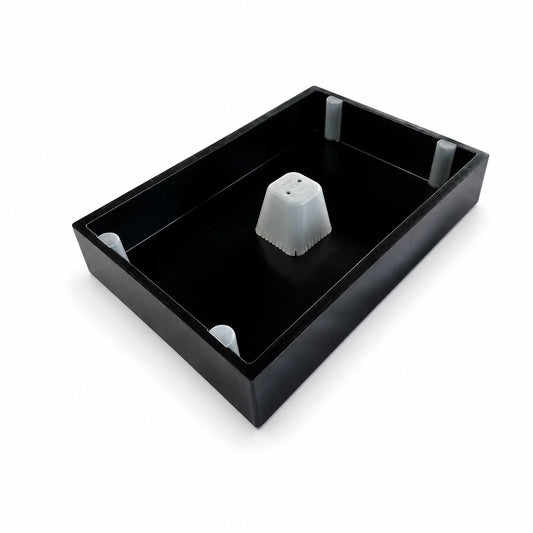
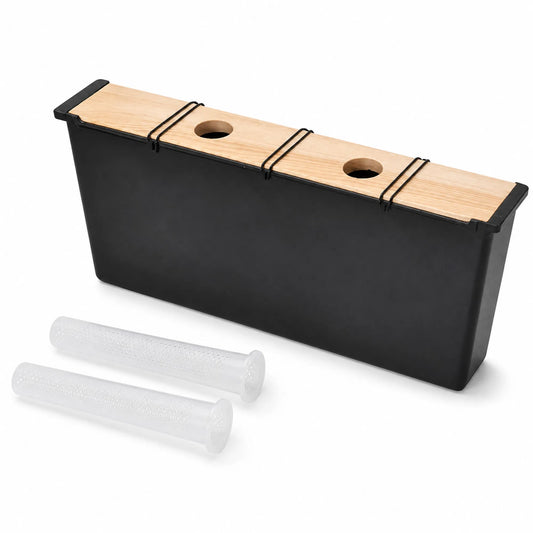
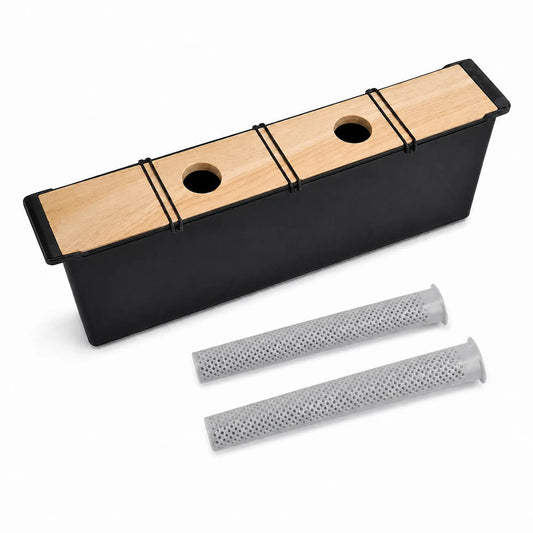
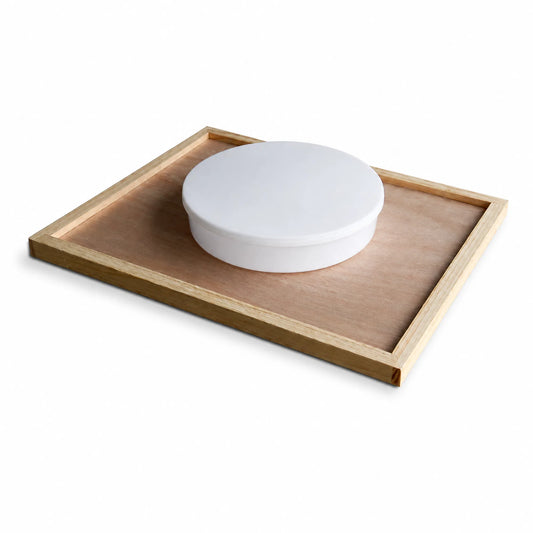
Our top feeder range includes the Hive Doctor Top Feeder (available in 8 and 10 frame sizes), the Beehive Top Feeder Round with Housing and Base Board, and the Ceracell Beehive Top Feeder — all designed with proper bee access, drowning prevention, and easy refilling in mind. If you already have a compatible housing, the Beehive Top Feeder Round Bowl Only is a cost-effective option to complete your setup.
What About Entrance Feeders?
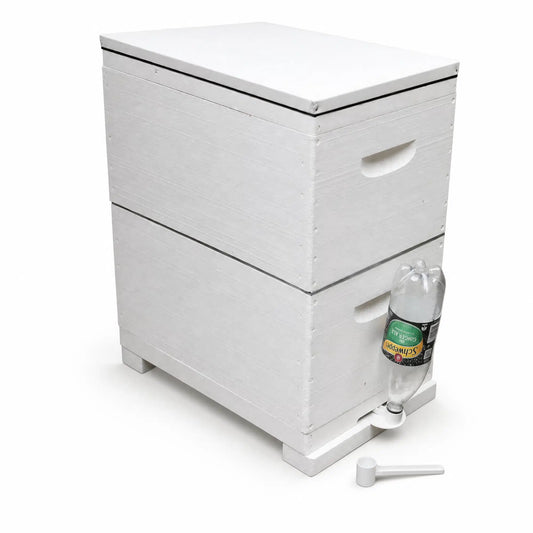
Entrance feeders have their place — they're inexpensive and simple to use, and the small water bowl adaptors work well for providing clean drinking water to your bees during hot weather. But for syrup feeding, the risks are real.
Syrup at the hive entrance creates a scent that other colonies can detect from a distance. That triggers robbing behaviour — where bees from neighbouring hives attempt to steal the feed. Once robbing starts it's very difficult to stop, it stresses your colony enormously, and it can result in the complete loss of a weaker hive. Beyond that, any feeding that occurs outside the hive or at the entrance puts you in breach of Australian biosecurity regulations designed to prevent the spread of bee disease between colonies.
For supplemental syrup feeding, a top feeder or frame feeder is always the better call.
Feed and Nutritional Supplements
A feeder is only as good as what you put in it. Alongside our range of feeders we stock a carefully selected range of bee feed and nutritional supplements for every stage of the season:
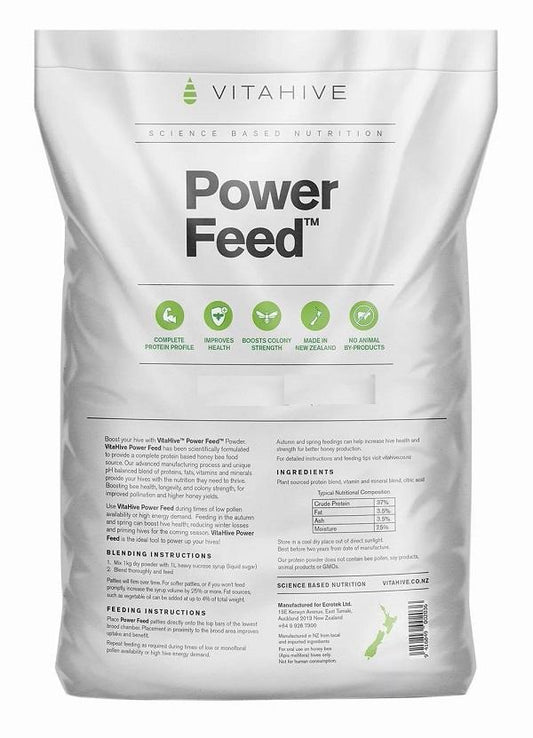
- Vitahive Power Feed Powder — pollen substitute for protein support when natural forage is scarce
- Vitahive Brood Booster — concentrated liquid formula to stimulate brood production and colony growth
- Vitahive Patties — ready-made pollen substitute patties placed directly on the top bars
-
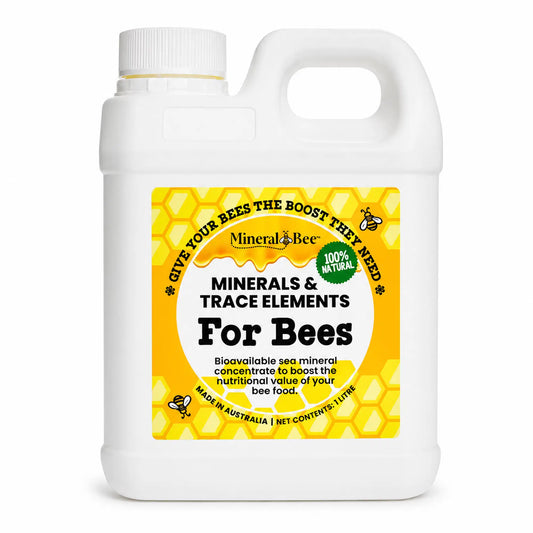
Mineral & Trace Elements for Bees (Australian Made) — added to syrup to provide a complete nutritional profile
- Minerals and Trace Elements Spray — ready-to-use spray for targeted mineral supplementation
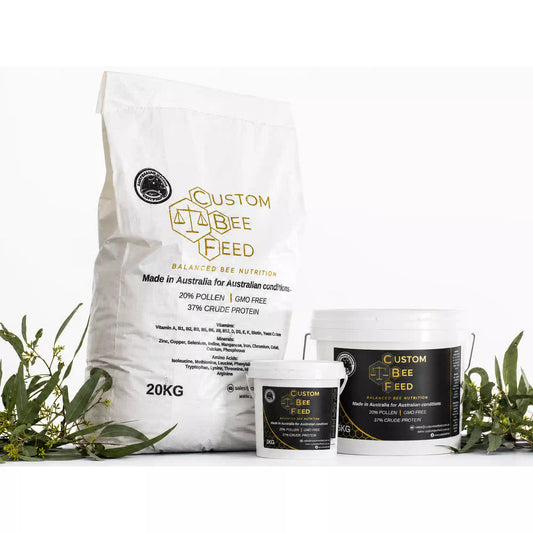
- Custom Bee Feed (Australian Made) — a complete, ready-to-use feed for beekeepers who want a quality-controlled solution without the mixing