Beekeeping Gear
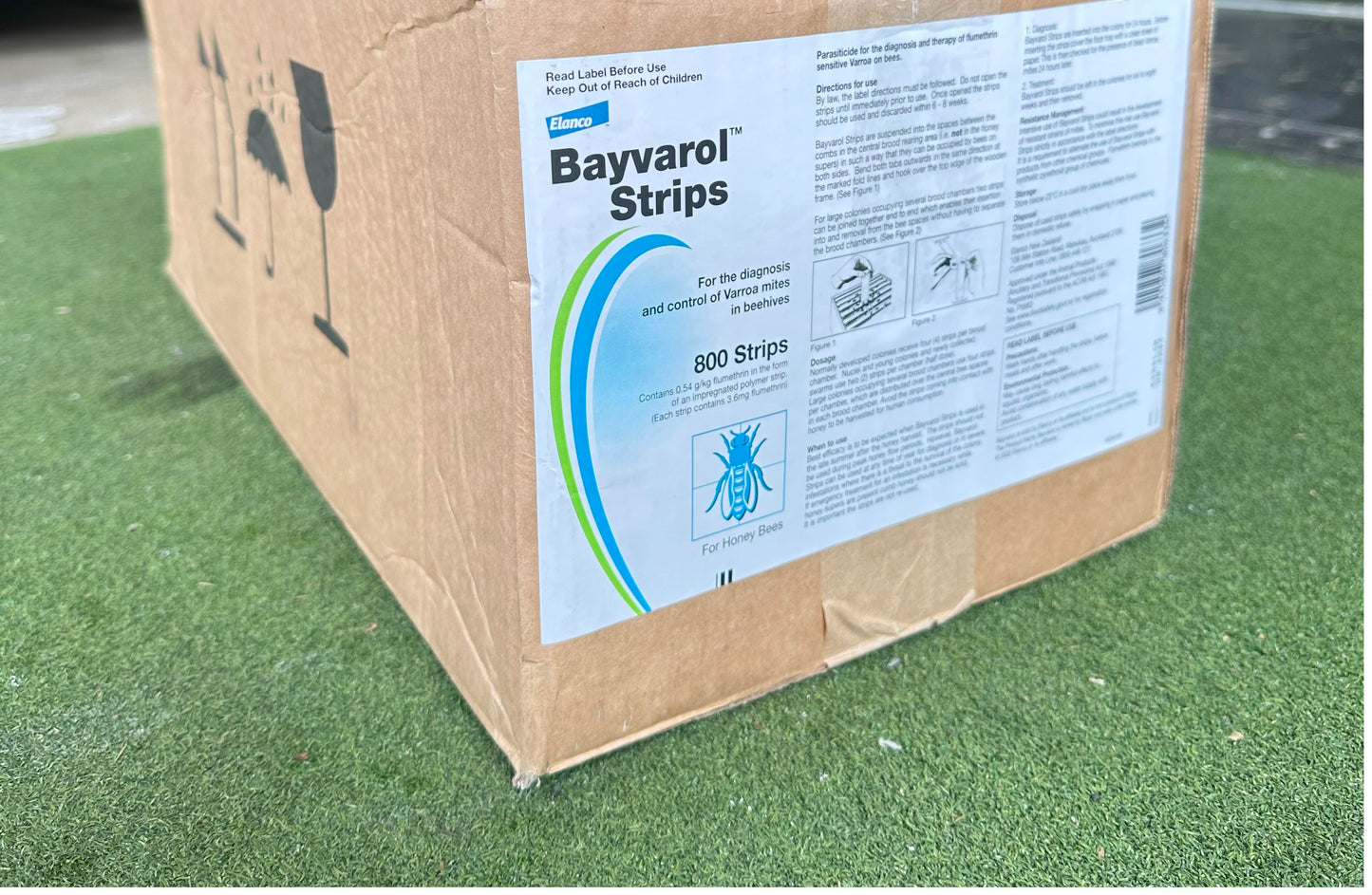
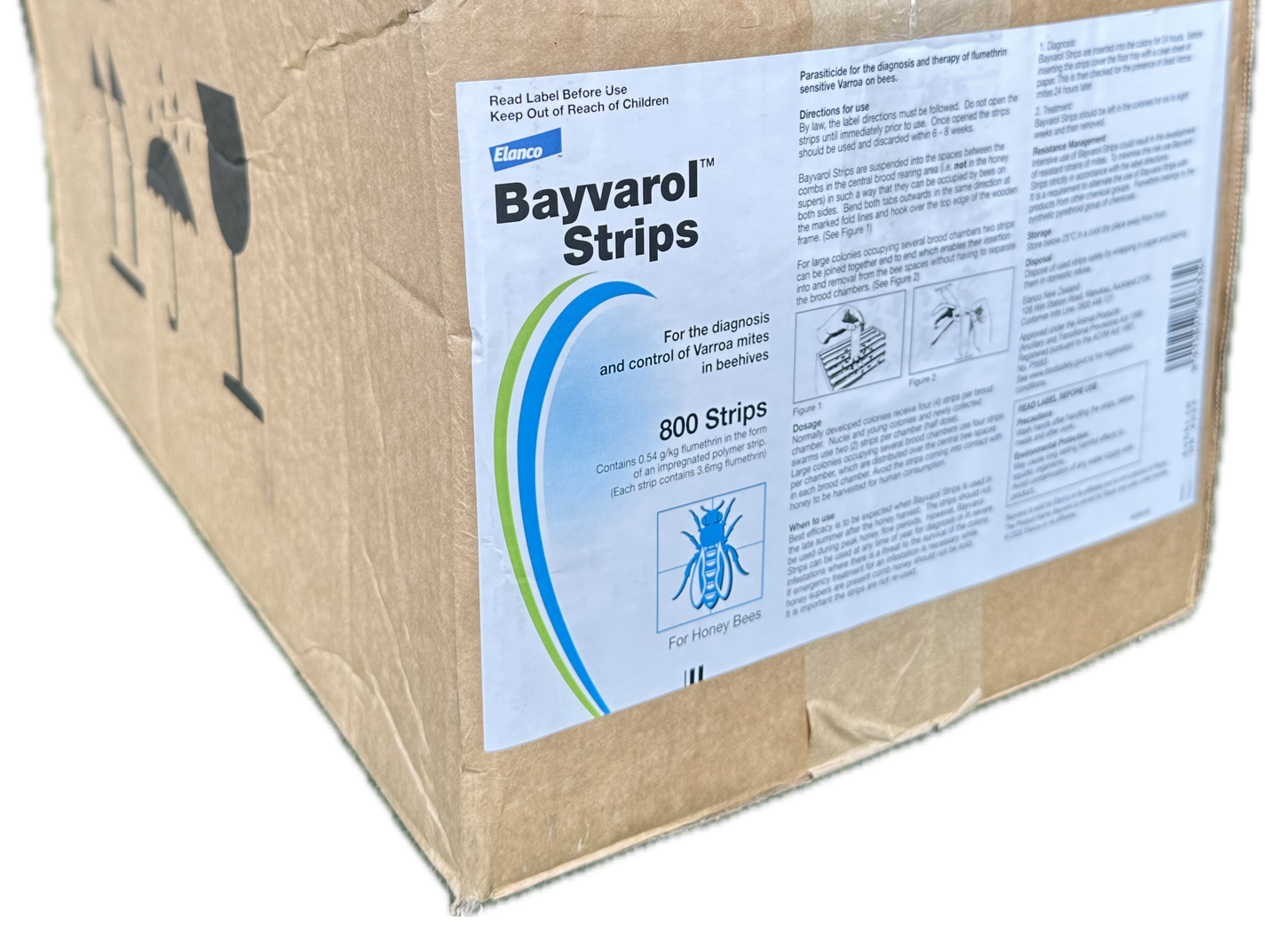
Bayvarol Strips - Pack of 800 (200 Hives)
Bayvarol Strips - Pack of 800 (200 Hives)
Couldn't load pickup availability
Commercial Varroa Control for Serious Operators
If you're running dozens or hundreds of hives, varroa treatment isn't a once-a-season afterthought, it's a critical, recurring, expensive part of your operation. Buying small retail packs for every cycle is inefficient. The Bayvarol® Strips Pack of 800 is the commercial bulk solution, one purchase treats 200 hives with a globally trusted, APVMA-permitted varroa miticide.
Bayvarol delivers reliable control via flumethrin, a synthetic pyrethroid valuable in any IPM rotation. Manufactured by Bayer, APVMA-permitted under PER95037, delivered as strips hung between brood frames for slow-release treatment. Used in rotation with oxalic acid and amitraz, it forms the third critical chemical class needed to prevent resistance.
Why Buy the 800-Pack Instead of Smaller Packs?
Pure economics, the 800-pack delivers significantly better per-strip pricing than smaller retail packs. It covers 200 hives at 4 strips per hive, enough for one complete treatment cycle of a sizeable commercial operation, or two cycles for a 100-hive sideliner. For fewer hives, smaller pack sizes suit better.
What Makes Bayvarol Effective?
Flumethrin is highly toxic to varroa but safe for bees when used as directed. Each strip releases the active ingredient gradually over 6 to 10 weeks, covering a complete brood cycle, critical since mites hide inside capped brood cells where short-burst treatments can't reach. Bees distribute it through grooming and trophallaxis, typically achieving 90%+ varroa knockdown per cycle.
How Do I Apply Bayvarol Strips?
Remove honey supers first, since Bayvarol has a mandatory withholding period. Hang 4 strips per brood box between frames where bee traffic is highest, leave in place for 6 to 10 weeks, then remove and dispose according to APVMA guidelines before resuming honey production.
Why Rotate Treatments?
Using one chemical class repeatedly lets mites develop resistance. A strong Australian IPM rotation combines pyrethroids (Bayvarol), amitraz (Apivar/Apitraz), and organic acids (Api-Bioxal), preventing any one class from being overused.
When Should I Treat?
Ideal windows are late summer to early autumn after the honey flow, and early spring before supers go on. Always monitor mite levels first with a sugar shake, alcohol wash, or sticky-board count before treating.
Does It Require Honey Withholding?
Yes, unlike organic-acid treatments. Remove supers before treatment and observe the withholding period per APVMA permit conditions before honey production resumes.
Record Keeping
APVMA Permit PER95037 requires records kept for 2 years minimum, including treatment dates, hive locations, quantity used, removal dates, and the names of those performing treatment.
Specifications
- Manufacturer: Bayer
- Active ingredient: Flumethrin, 3.6mg per strip
- APVMA Permit: PER95037
- Pack size: 800 strips, treats 200 hives
- Treatment duration: 6 to 10 weeks in-hive
- Efficacy: Typically 90%+ knockdown per cycle
- Honey withholding: Required
Why Buy From Beekeeping Gear?
Australia's trusted source for APVMA-permitted varroa management products since 2016, with showrooms in Granville and Meadowbrook (QLD). For commercial bulk orders, call 1300 692 766 for freight quotes and custom pricing.
How many hives does one 800-pack treat?
It treats 200 hives at the recommended 4 strips per hive, enough for one full commercial treatment cycle or two cycles for a 100-hive operation.
What is the active ingredient in Bayvarol?
Flumethrin, a synthetic pyrethroid at 3.6mg per strip, highly toxic to varroa mites but safe for bees when used as directed.
How long do the strips stay in the hive?
Strips remain in place for 6 to 10 weeks, covering a complete brood cycle so mites emerging from capped cells are also treated.
Do I need to remove honey supers before treating?
Yes, Bayvarol requires a mandatory honey withholding period. Remove all honey supers before treatment and observe the withholding period before resuming.
Why should I rotate Bayvarol with other treatments?
Using one chemical class repeatedly allows mites to develop resistance. Rotating with amitraz and organic acids like Api-Bioxal prevents overuse of any single class.
When is the best time to treat with Bayvarol?
Late summer to early autumn after the honey flow, or early spring before supers go on, are the ideal treatment windows.
What efficacy can I expect from Bayvarol treatment?
Typically 90 percent or higher varroa knockdown per treatment cycle when applied correctly across the full 6 to 10 week window.
Is record keeping required for Bayvarol treatment?
Yes, APVMA Permit PER95037 requires treatment records kept for a minimum of 2 years, including dates, hive locations, and quantities used.
Is this pack suitable for hobbyist beekeepers?
It's designed for commercial operators running 100 or more hives. Hobbyists with fewer hives should consider smaller Bayvarol pack sizes.
How should I store and dispose of the strips?
Store in the original sealed container in a cool, dry place away from children, pets, and food, and dispose of used strips per APVMA guidelines.