Beekeeping Gear
Queen Marker Catcher | One-Hand Plunger Marking Tube
Queen Marker Catcher | One-Hand Plunger Marking Tube
Couldn't load pickup availability
A One-Hand Queen Marker: Hold Her Gently, Dot Her, Let Her Go
Everyone who has marked a queen remembers the first time: queen balanced on the fingertips, pen in the other hand, a frame of bees going about their business underneath, and the quiet certainty that she is about to walk off your thumb and fly. Most beginners put it off for a season for exactly that reason, then spend every inspection hunting for an unmarked queen.
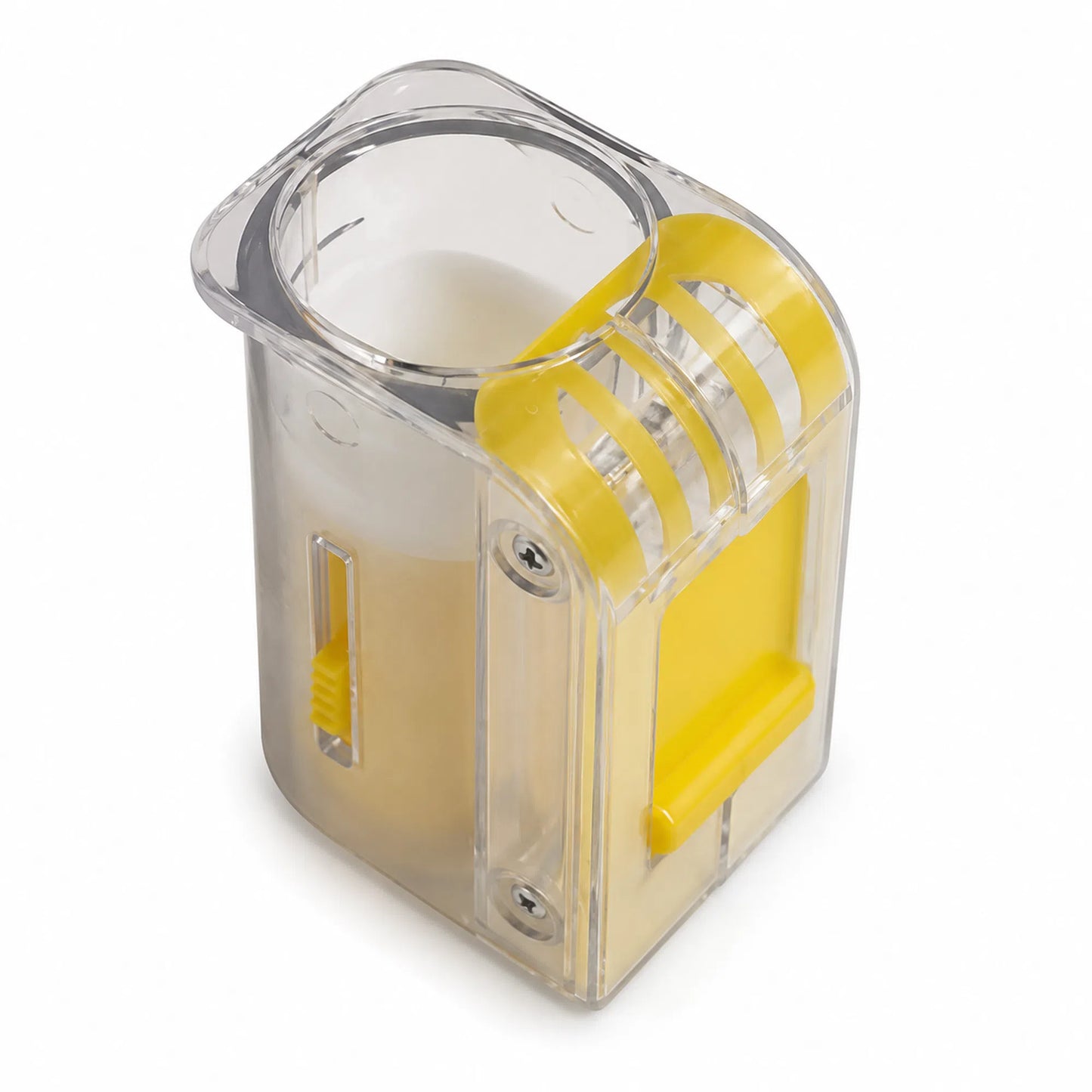
A plunger marker takes the fingertips out of it. It is a clear tube with a mesh top and a spring plunger with a soft sponge on the end. Set the tube over her on the comb, let her walk in, and push the plunger up so the sponge holds her gently against the mesh. Dot her thorax through the mesh, wait for the paint to set, release. One hand on the marker, the other free for the pen.
How to Use It Without Hurting Her
The sponge does the holding, so the only pressure that matters is how far you push the plunger: just enough that she cannot turn. Too much and you crush her, too little and she swings round and you paint a wing or an eye. Aim for a small dot on the thorax, the hard plate between the wings, and nowhere else. Hold her for about thirty seconds while the paint sets, because a wet mark gets wiped off by the first worker who grooms her. If it is your first time, practise on a drone. They do not sting and nobody misses a drone.
Why Mark a Queen at All
A marked queen takes seconds to find, while an unmarked one can take the whole inspection. That matters when you are splitting, requeening or checking whether the colony has quietly replaced her. The international colour code gives each year its own colour, white, yellow, red, green and blue in rotation, so a glance at the dot tells you how old she is and whether the queen you found is the one you put in.
What It Is Not
It is a marking tool, not a cage. It will not hold her safely while you do something else and it will not carry her between hives. For that, use the queen cage or the clip catcher in the range. It does not come with a pen: a POSCA marking pen is the one to pair it with, and the queen muff is worth having if you work alone and have ever watched a queen lift off the frame.
Specifications
- Type: one-hand plunger queen marking tube
- Holding: soft sponge pad on a spring plunger, mesh top for marking
- Operation: single hand, leaving the other free for the pen
- Use: marking only, not a holding or transport cage
- Pen: not included
How does the plunger queen marker work?
Set the clear tube over the queen, let her walk in, then push the plunger so a soft sponge holds her gently against the mesh top. Dot her thorax through the mesh.
Can I operate it with one hand?
Yes. One hand works the marker and the other is free for the pen.
Does it come with a marking pen?
No. The pen is not included. A POSCA marking pen is the one to pair it with.
Where on the queen do I put the dot?
A small dot on the thorax, the hard plate between the wings, and nowhere else.
How hard should I push the plunger?
Just enough that she cannot turn. Too much can crush her, and too little lets her swing round so you paint a wing or an eye.
How long should I hold her while the paint sets?
About thirty seconds. A wet mark gets wiped off by the first worker who grooms her.
What is the queen colour code?
The international code gives each year a colour in rotation: white, yellow, red, green and blue. The dot tells you how old she is.
Can I use it to hold or move a queen between hives?
No. It is a marking tool, not a cage. Use a queen cage or clip catcher for holding or transport.
How can a beginner practise first?
Practise on a drone. Drones do not sting and nobody misses one.
Why mark a queen?
A marked queen takes seconds to find, which helps when splitting, requeening or checking whether the colony has replaced her.